• Zur Metanavigation
  • Zur Hauptnavigation
  • Zur Suche
  • Zum Inhalt
  • Zur Subnavigation
  • Zum Seitenfuß
  • University of Hamburg
  • For journalists
  • Staff Service Portal0
  • STiNE
https://www.kus.uni-hamburg.de/aktuelles.json?recentnews=true
  • Institutions and target groups
    • Einrichtungen
      • Faculties

        • Faculty of Law
        • Faculty of Business, Economics and Social Sciences
        • Faculty of Medicine
        • Faculty of Education
        • Faculty of Humanities
        • Faculty of Mathematics, Informatics and Natural Sciences
        • Faculty of Psychology and Human Movement Science
        • University of Hamburg Business School
      • Services

        • Study Information Net STiNE
        • Surfmail
        • Exchange
        • Staff Service Portal
        • Learning Platforms
        • Katalogplus – Catalogue of Hamburg Libraries
        • SharePoint
      • Student facilities and services

        • Campus Center
        • Career Center
        • PIASTA
        • AStA (student council)
        • University Sports
        • University Music
        • Family Office
        • University Language Center
        • General Languages
        • Office of Affairs for Students with Disabilities or Chronic Diseases
        • Departmental libraries
        • Healthy Campus
      • Further facilities and services

        • The Cluster of Excellence CLICCS
        • The Cluster of Excellence CUI
        • The Cluster of Excellence Quantum Universe
        • The Cluster of Excellence Understanding Written Artefacts
        • Hamburg Research Academy
        • Pier Plus
        • Hamburg Center for University Teaching and Learning (HUL)
        • Hub for Crossdisciplinary Learning (HCL)
        • CEN
        • Museums and collections
        • University Archives (in German)
        • Regional Computing Center (RRZ)
        • University Administration
        • Knowledge Exchange Agency
        • The Unikontor Shop (in German)
    • Target groups

      • Prospective students
      • Students
      • International prospective students
      • Young researchers
      • Researchers
      • Instructors
      • Staff
      • Prospective continuing education students
      • Alumni
      • Journalists
      • Refugees (in German only)
    Close
  • /sitemap.json
University of Hamburg - to research, to teach, to educate and form, to homepage

Beta maṣāḥǝft

Beta maṣāḥǝftManuscripts of Ethiopia and Eritrea
  • About the project
    • Background
    • The Ethiopic language
    • Current situation
    • Partners
  • Manuscripts
    • Codicology
    • Palaeography
    • Scribes
    • Manuscript collections
    • New research
  • Literature
    • Clavis Aethiopica
    • Authors
    • Genres
    • Paratexts, guest texts, colophons
  • Publications
    • Publications
    • Catalogues
  • Our team
    • Current team
    • Former team members
    • Cooperation partners
  • News

Photo: Ethio-SPaRe

  1. UHH
  2. Humanities
  3. AAI
  4. Beta maṣāḥǝft
  5. Literature
  6. Genres

Genres

The bulk of Ethiopic literature, just like of other literatures of Christian Orient, is formed by religious texts, primarly those needed for the church service and for the everyday life of the Christian.

These start with the Bible - the first text believed to have been translated into Ethiopic from Greek around the time of the Christianization of Ethiopia (mid-fourth century AD; it was later revised against the Coptic Arabic version). Among the books of the Bible, the Four Gospels  and the Psalter are most frequently copied; each parish possesses at least one copy of both. The pseudepigrapha (including the 'apocryphal' texts of the Jubilees or the Ethiopic Book of Enoch, surviving in Ethiopic only) were also translated during the very early phase of Ethiopic literature; the use of these texts at least as is illustrated by the manuscripts existing today is, however, quite limited. To the early layer of Ethiopic literature such works also belong as the texts of the Church Fathers and the hagiographies of the early Christian martyrs. The antiphonary of the year (Deggwa) is said to have been composed locally, in the sixth century AD.
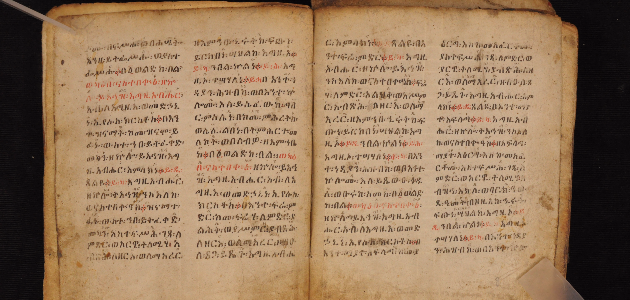
Religious texts translated from Arabic, or composed locally, in the thirteenth-seventeenth centuries included numerous homilies and hymns, service texts such as the Gebra hemamat or the Mashafa sa'atat, the Synaxary, the canon law compendium Senodos, and, importantly, the collection of the Miracles of Mary. Most hagiographies of Ethiopian saints were composed beginning with the fifteenth/sixteenth century.

Poetry (hymns, homilies, 'images', qene) is nearly exclusively religious.

Probably the most prominent 'secular' text of the early Ethiopian tradition is the Kebra nagast. Most probably compiled in the first half of the fourteenth century, with possibly at least partial ‘Vorlage’ in Copto-Arabic milieu (depending on the degree of trust one places in the ‘colophon’), it incorporates elements from various traditions of the Near East (Christian, but also Jewish, with Islamic parallels).

Universal chronicles, 'short chronicles', and chronicles of reign of particular kings are examples of historiographical literature in Ge'ez.
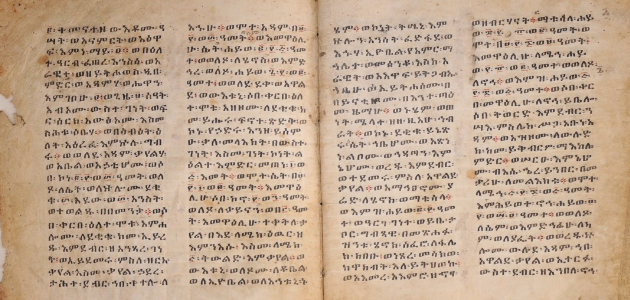
Documentary texts are mostly represented by land grants (often transmitted in the so-called 'Golden Gospels' manuscripts).


  • Literature

  • Clavis Aethiopica
  • Authors
  • Genres
    • Paratexts, guest texts, colophons

    Contact

    Scientific Director

    Alessandro Bausi

    Administrative Director

    Eugenia Sokolinski

    Email

    aethiopistik@uni-hamburg.de(aethiopistik"AT"uni-hamburg.de.)

    Last update: 10 May 2017

    • Feedback
    • Legal notice
    • Privacy statement
    • Accessibility
    • Site map

    University of Hamburg

    Innovating and Cooperating for a Sustainable Future in a Digital Age

    • Follow us on Instagram.
    • Follow us on Facebook.
    • Connect with us on LinkedIn.
    • Follow us on Mastodon.
    • Follow us on Bluesky.
    • Subscribe to our channel on YouTube.
      • Studies
      • Prospective students
      • Continuing education
      • Research
      • Teaching at UHH
      • Doctoral studies
      • Job opportunities
      • Knowledge exchange
      • University
      • Excellence
      • Faculties
      • Alumni
      • Contact
      • Campus Navigator
      • UHHApp
      • Emergencies, safety and security
      • Antidiscrimination
    Go to family-friendly higher education institution audit
    Go to internationalisation re-audit
    Go to the Sustainability Audit page
    Go to Diversity Audit
    Go to System accreditation

    © 2026 University of Hamburg. All rights reserved